
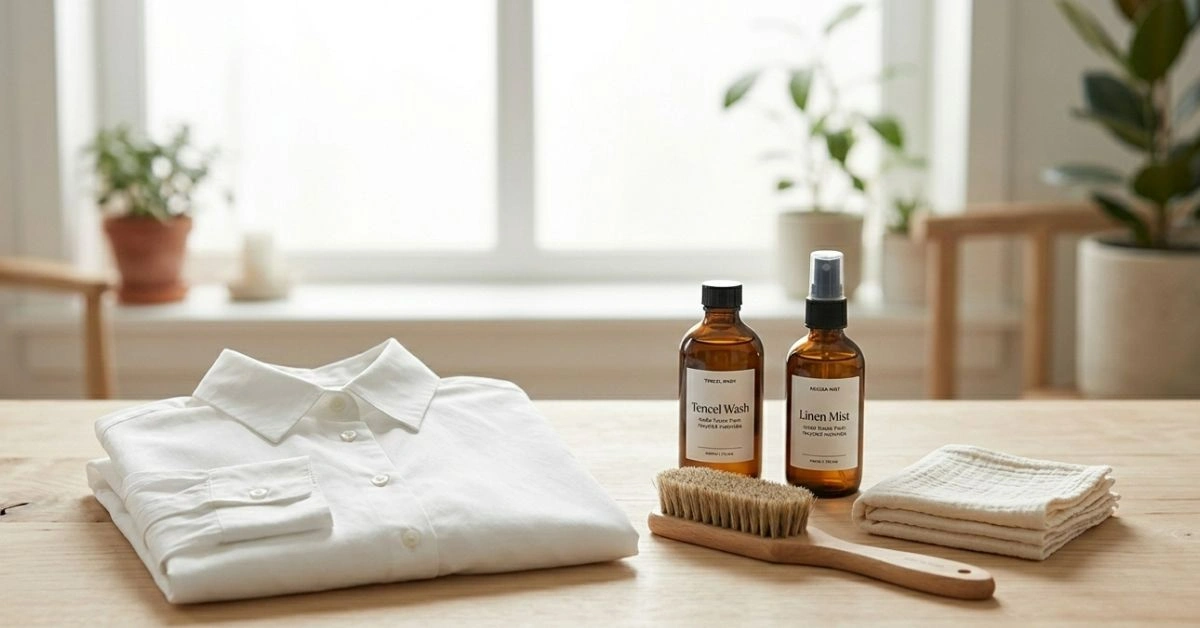
Why Fabric Care Determines Whether Your Wardrobe Lasts or Fails
Most wardrobes don’t wear out — they break down. Heat, moisture, and mechanical agitation degrade fibers long before visible damage appears. What people assume is “normal aging” is often preventable structural deterioration caused by overwashing, high heat, and improper storage.
If you’ve invested in quality staples — tailored blazers, Tencel trousers, organic cotton basics, vegetable-tanned leather belts, or bio-acetate accessories — their longevity depends less on brand and more on maintenance strategy. The difference between a blazer that lasts two years and one that lasts eight is not price. It’s a preservation discipline. And that directly reduces cost per wear.

What Is a Fabric Care Protocol?
A fabric care protocol is a structured system for extending garment lifespan through controlled washing frequency, low-heat exposure, targeted stain treatment, and material-specific maintenance practices.
Its purpose is to preserve fiber integrity, structural shape, and surface finish — so clothing remains wearable for years rather than seasons.
In practical terms, this means:
-
Washing less frequently and more strategically
-
Avoiding high heat during drying
-
Spot-cleaning instead of default machine cycles
-
Conditioning natural materials like leather
-
Protecting sensitive materials such as Tencel and bio-acetate
When applied consistently, a fabric care protocol lowers replacement frequency and significantly reduces cost per wear.
Tencel™ and Organic Cotton Care
High-quality basics often rely on cellulose fibers such as Tencel™ (lyocell) and organic cotton. These materials are breathable, durable, and comfortable — but they are sensitive to heat and mechanical friction.
Why Heat Is the Enemy
Both fibers degrade under high heat:
-
Tencel can shrink and lose its fluid drape.
-
Organic cotton loses softness and becomes brittle over time.
-
Repeated tumble drying accelerates fiber breakdown at the microscopic level.
Care Protocol
Washing
-
Cold water only.
-
Delicate cycle.
-
Use a pH-neutral, low-residue detergent.
-
Avoid bleach and heavy enzyme formulas.
Drying
-
Lay flat to air dry.
-
Avoid hanging wet Tencel trousers, which can stretch at the waistband.
-
Never tumble dry.
If available, consider using a micro-fiber filtration device on your washing machine. While Tencel sheds significantly less than synthetic fabrics, filtration systems reduce fiber release and support long-term garment stewardship.
Common Mistake → Failure State
Mistake: Drying Tencel garments in direct sunlight.
Result: “Silvering” — a permanent shiny stiffness that ruins drape.
Mistake: Frequent hot washes for odor control.
Result: Fading, fiber thinning, and loss of softness within 1–2 years.
Properly cared for, high-quality Tencel trousers or cotton tanks can maintain shape and softness for five years or more — even with regular wear.
Structured Pieces: Blazers and Tailored Garments
Structured garments rely on internal construction: interfacing, lining, shoulder pads, and seam tension. Washing breaks down these elements faster than most people realize.
Care Protocol
-
Dry clean only when necessary.
-
Request eco-solvent cleaning when available.
-
Between wears, air garments for 24 hours before storing.
-
Use wide wooden hangers to preserve shoulder structure.
Spot Cleaning Instead of Overwashing
For minor stains:
-
Use a bio-based stain remover.
-
Dab gently — never rub.
-
Blot from the inside out to prevent spreading.
Newer probiotic fabric sprays can also neutralize odor between wears without washing. These sprays use beneficial bacteria to break down odor molecules rather than masking them with fragrance.
Common Mistake → Failure State
Mistake: Machine washing structured blazers.
Result: Warped lining, collapsed shoulders, and distorted seams.
Mistake: Hanging damp garments in tight closets.
Result: Mildew odor and permanent wrinkling in sleeve creases.
With disciplined care, a structured blazer can maintain shape for 7–10 years.
Vegetable-Tanned Leather: Built to Age — If You Let It
Vegetable tanning uses natural tannins derived from bark and plant matter. Unlike chrome-tanned leather, it develops patina over time. That patina is desirable — cracking is not.
Why Conditioning Matters
Leather loses moisture gradually. Without replenishment, it stiffens and fractures at stress points (belt holes, bag handles, strap folds).
Care Protocol
Conditioning
-
Use a pH-balanced leather conditioner.
-
Choose natural oil-based formulas (neatsfoot or plant-based alternatives).
-
Condition lightly every 2–3 months.
Storage
-
Store in a cool, dry place.
-
Avoid prolonged sunlight exposure.
-
Do not fold belts tightly; hang or roll loosely.
Common Mistake → Failure State
Mistake: Using cheap shoe polish on vegetable-tanned leather.
Result: Surface buildup, dryness beneath the polish layer, eventual cracking.
Mistake: Storing leather in humid areas.
Result: Mold spotting and permanent surface damage.
Well-maintained vegetable-tanned belts and bags can last over a decade — and often look better after years of wear.
Bio-Acetate Sunglasses: Sustainable, but Sensitive
Bio-acetate (plant-based acetate) is often marketed as biodegradable. It is more environmentally considered than petroleum plastic — but it requires gentler care.
The Technical Detail Most People Miss
Bio-acetate is more sensitive to:
-
Extreme pH levels
-
High alcohol exposure
-
Prolonged moisture
Care Protocol
-
Clean lenses with a microfiber cloth.
-
Wash frames occasionally with lukewarm water and pH-neutral soap.
-
Dry immediately with a soft cloth.
-
Store in a structured case.
Avoid
-
High-alcohol lens sprays.
-
Cleaning with hand sanitizer.
-
Leaving frames in hot cars.
Common Mistake → Failure State
Mistake: Using standard alcohol-heavy lens cleaners daily.
Result: Surface clouding and weakened organic fibers.
Mistake: Heat exposure in vehicles.
Result: Warping and hinge loosening.
With proper care, bio-acetate frames maintain clarity and structural integrity for many years.
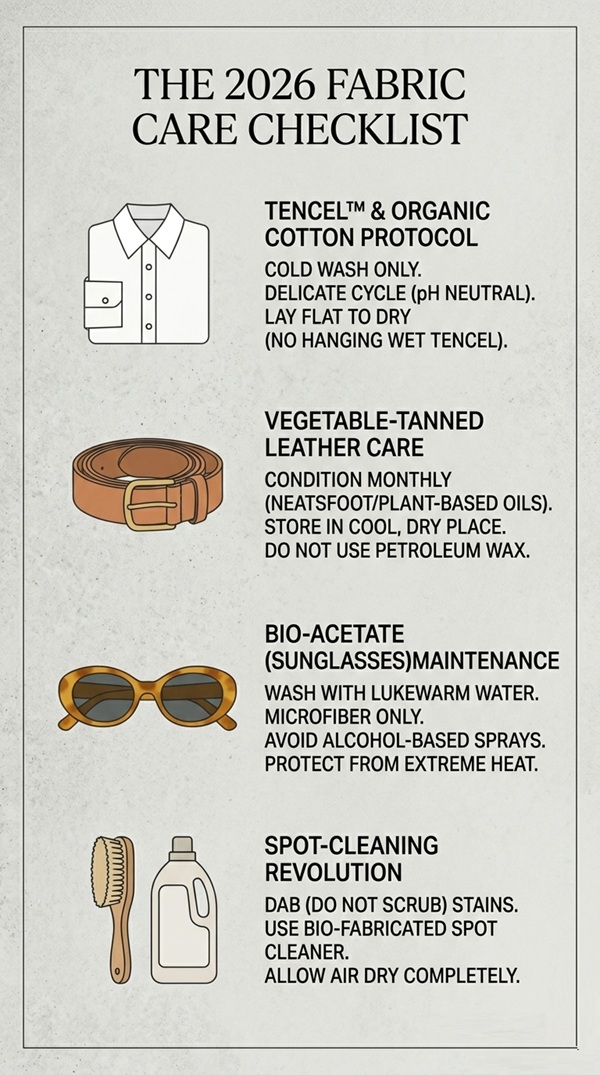
The Spot-Cleaning Discipline: The Most Underrated Strategy
Overwashing is the fastest way to shorten garment lifespan. Water agitation and detergent friction break down fibers more than wear itself.
The Modern Approach
-
Spot-clean minor stains immediately.
-
Air garments after each wear.
-
Wash only when visibly soiled or odor persists.
For coffee, oil, or makeup:
-
Apply targeted stain remover.
-
Blot gently.
-
Rinse lightly if needed.
-
Air dry.
Water Impact
A full washing machine cycle can use 15–40 gallons of water, depending on efficiency. Spot-cleaning uses a fraction of that — and dramatically reduces fiber stress.
Common Mistake → Failure State
Mistake: Washing after every single wear.
Result: Fading, thinning, seam stress, and loss of structure within two years.
Less washing equals longer garment life.
Pairing Care With a Capsule Wardrobe
Even if you haven’t curated a full capsule yet, proper care dramatically enhances versatility — but only if you commit to it. Ignoring washing instructions, leaving leather in sunlight, or over-washing delicate fabrics will quickly undermine even high-quality pieces.
-
Structured tops, blazers, and trousers stay crisp and wearable across multiple looks, from office meetings to casual weekends, if handled carefully. For example, a linen-blend blazer layered over a cream organic cotton tank keeps its drape and shoulder line when air-dried and stored correctly.
-
Sustainable accessories like belts, bags, and sunglasses maintain their finish, complementing outfits effortlessly. A caramel vegetable-tanned belt or recycled vegan leather bag can elevate an entire outfit, but skipping conditioning or exposing them to heat will shorten their lifespan dramatically.
-
Useful Advice: Minimalism isn’t just about buying fewer pieces — it’s about making every investment last. Following these care practices ensures clothing and accessories remain versatile, functional, and visually polished over months and years. Even a single neglected item can throw off your whole capsule aesthetic.
Optional Reading: For inspiration on assembling cohesive pieces and sustainable accessories, see our [90s Minimalist Spring Capsule Under $500] and [90s Accessory Edit] guides — these are helpful but not required to apply these care strategies.
Frequently Asked Questions
1. How often should you wash capsule wardrobe pieces?
Capsule wardrobe pieces should only be washed when visibly soiled or when odor persists after airing out. Overwashing is one of the fastest ways to shorten garment lifespan. Water agitation and detergent friction gradually weaken fibers, fade color, and distort shape.
Structured items like blazers may only need cleaning a few times per season, while cotton basics can often be worn 2–3 times before washing. The goal is to reduce unnecessary wash cycles to protect fabric integrity and lower cost per wear.
2. Does air drying really extend the life of clothing?
Yes. Heat is one of the primary causes of fiber breakdown. Tumble drying accelerates shrinkage, weakens elastic fibers, fades dyes, and stiffens cellulose-based fabrics like Tencel and cotton.
Air drying — especially laying flat for delicate items — preserves drape, prevents stretching, and maintains softness. Over several years, avoiding high heat can significantly extend garment lifespan.
3. What is the correct way to care for Tencel fabric?
Tencel should be washed in cold water on a delicate cycle using a pH-neutral detergent. Avoid bleach and heavy enzyme detergents. Lay flat to air dry rather than hanging wet garments, which can stretch the waistband or seams.
High heat or excessive agitation can cause shrinkage, fading, or surface stiffness. When cared for properly, Tencel maintains its smooth texture and fluid structure for years.
4. How long does vegetable-tanned leather last with proper care?
Vegetable-tanned leather can last 10 years or more when conditioned regularly and stored properly. Light conditioning every 2–3 months helps prevent drying and cracking, especially around stress points like belt holes or bag handles.
Avoid prolonged sun exposure and high humidity. Unlike synthetic leather, vegetable-tanned leather improves with age — developing a natural patina instead of deteriorating.
5. Can bio-acetate sunglasses be cleaned with alcohol-based sprays?
No. Bio-acetate (plant-based acetate) is more sensitive to high alcohol content than petroleum plastic. Frequent use of alcohol-heavy lens sprays can cause surface clouding and weaken the frame over time.
Instead, clean lenses with a microfiber cloth and wash frames occasionally with lukewarm water and pH-neutral soap. Always dry immediately to prevent moisture absorption.
6. What reduces the cost per wear the most?
The biggest factor in reducing cost per wear is limiting heat exposure and overwashing. High temperatures and aggressive cycles break down fibers faster than normal wear.
Strategic care — including spot-cleaning, air drying, proper storage, and regular conditioning of leather — extends garment lifespan dramatically. When pieces last twice as long, cost per wear can drop by more than half.
Final Thoughts: Longevity Over Trend
Minimalism rewards intentional, strategic choices. Every investment — from wide-leg trousers to structured blazers, and from vegetable-tanned belts to biodegradable sunglasses — should enhance your wardrobe without competing.
Proper care for fabric and accessories ensures your capsule remains polished, cohesive, and wearable season after season. By following these realistic, expert-backed strategies, your wardrobe looks fresh, effortless, and deliberate — whether or not you’ve yet built a minimalist capsule wardrobe. Every piece you maintain well becomes a foundation for countless outfits, giving you true long-term value from your investments.
Glow Up Your Routine with Stylevana!
References
-
U.S. Environmental Protection Agency (EPA).
Residential Clothes Washers and Water Efficiency.
https://www.epa.gov/watersense/residential-clothes-washers -
Textile Exchange.
Preferred Fiber & Materials Market Report.
https://textileexchange.org/preferred-fiber-and-materials-market-report/ -
Lenzing Group.
TENCEL™ Lyocell Fiber Care and Technical Information.
https://www.tencel.com -
Leather Naturally.
Vegetable-Tanned Leather and Material Longevity.
https://www.leathernaturally.org -
American Cleaning Institute (ACI).
Fabric Care and Laundry Best Practices.
https://www.cleaninginstitute.org